Detection and prevention of implant damage due to corrosion and infection
Detection and prevention of implant damage due to corrosion and infection
Project Handling: M.Sc. Franziska Winter
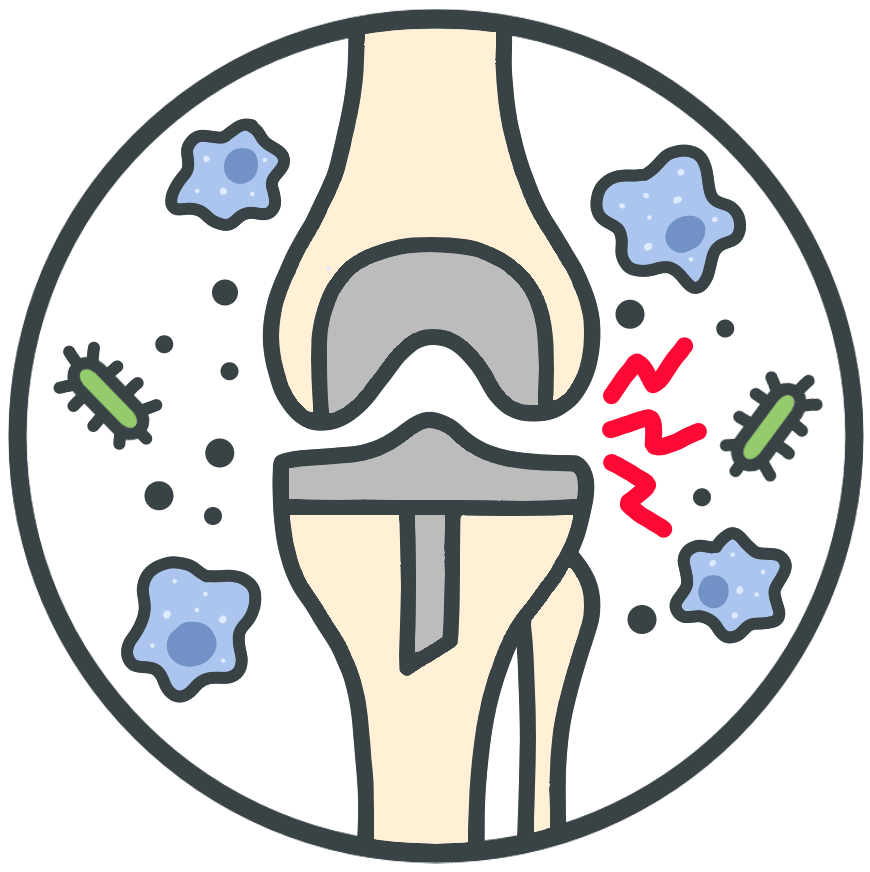
The loosening of implanted joint prostheses is a challenge that affects many people after knee or hip surgery. Within 10 years of installation, around 8% of all implanted joint prostheses become loose. The most common reason for late failure of a prosthesis is so-called aseptic prosthesis loosening, which is caused by the formation of wear particles. The aim of the study is to investigate the immune cells that play a key role in these processes, the macrophages. These are activated by ingesting the released wear particles. They then release pro-inflammatory cytokines and chemokines, which disrupts the balance between bone formation and resorption. Investigating the activation of the cells therefore offers both an opportunity to understand the durability of prostheses and to influence them.


Peer reviewed articles:
Conference contributions:
Höpfer R, Winter F, Krüger M, Bertrand J
Investigation of the powder metallurgical processability of a novel biomedical Ti-Nb-Ta multicomponent alloy manufactured by mechanical alloying [Poster presentation] 2025 34th annual Conference of the European Society for Biometerials (ESB). Torino, Italy, September 7-11, 2025
The full list of TACTIC publications can be found here
Prof. Bertrand's entry in Forschungsportal (LSA) is linked here