AI for antagonistic Co-Evolution
AI for antagonistic Co-Evolution
Co-Supervision: Prof. Dr. Benjamin Noack
Project Handling: M.Sc. Syed Muhammad Hamza Zaidi
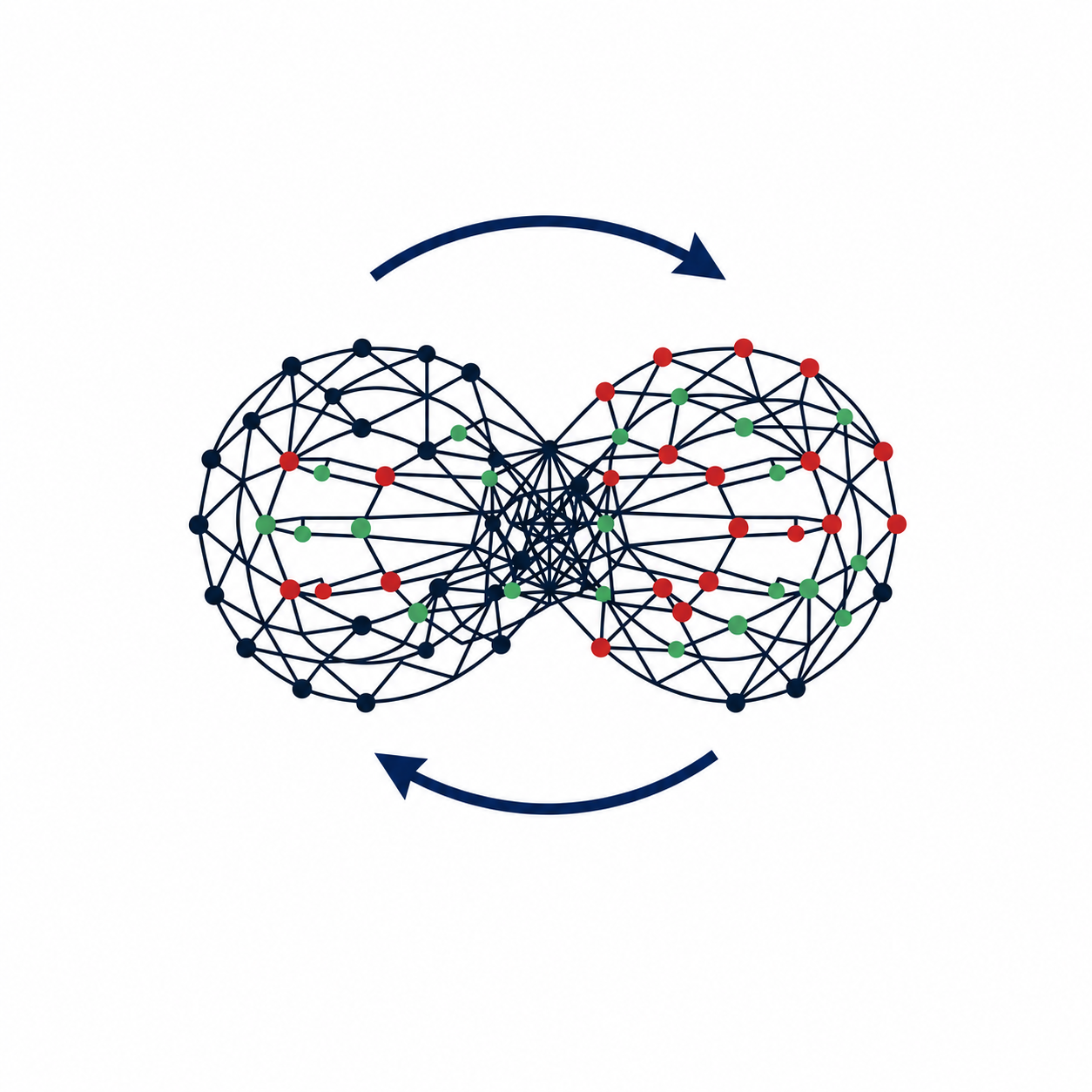
The graduate school 'TACTIC: Towards Co-Evolution in Human-Technology Interfaces' investigates co-evolution at the human-technology interface, both on the biological side and the technical side of an interface. A key objective of TACTIC is to create digital twins to describe the human and technical system as a coherent process. AI methods for controlling the co-evolution between the human element (e.g., tissue) and the non- human element (e.g., implant) are being designed and validated for this purpose. This sub-project focuses on antagonistic co-evolution, which could result in damage at the interface between the organ and the implant. The aim is, therefore, to recognize incipient antagonistic co-evolution at an early stage and to develop intervention strategies that remedy the antagonistic patterns.


Peer reviewed articles:
Conference contributions:
Zaidi SMH, Spiliopoulou M
Graph Neural Networks For The Localization Of Breathing Abnormalities [Abstract] 2025 38th Annual International Conference of the IEEE Computer Based Medical Systems (CBMS) , Madrid, Spain, 18-20 June 2025 DOI: 10.1109/CBMS65348.2025.00131
Bariszlovich F, Zaidi SMH, Noack B, Spiliopoulou M
Embedded System for Breathing Motion Monitoring Using Inertial Measurement Units [Poster presentation]
2025 47th Annual International Conference of the IEEE Engineering in Medicine and Biology Society (EMBC) , Copenhagen, Denmark, 14 - 17 July 2025.
Zaidi SMH, Klemm L, Noack B, Spiliopoulou M
Explainable Finger Kinematics Decoding with Temporal Graph Neural Networks (accepted)
Proceedings of the 39th IEEE International Symposium on Computer Based Medical Systems (CBMS2026), Limassol, Cyprus, June, 2026.
Bobek S, Zaidi SMH, Spiliopoulou M, Nalepa GJ
Counterfactuals by Design: Residual Decomposition and Back-to-Normality Editing for Time Series
2026, (IJCAI-ECAI XAI Workshop 2026)
Zaidi SMH, Bobek S, Nalepa GJ, Spiliopoulou M
Counterfactual Transition Graphs: Evaluating Cross-Class Transition Quality
2026, (ECML PKDD XKDD 2026)
The full list of TACTIC publications can be found here
Prof. Spiliopoulou's entry in Forschungsportal (LSA) is linked here